EDITED PROJECTS
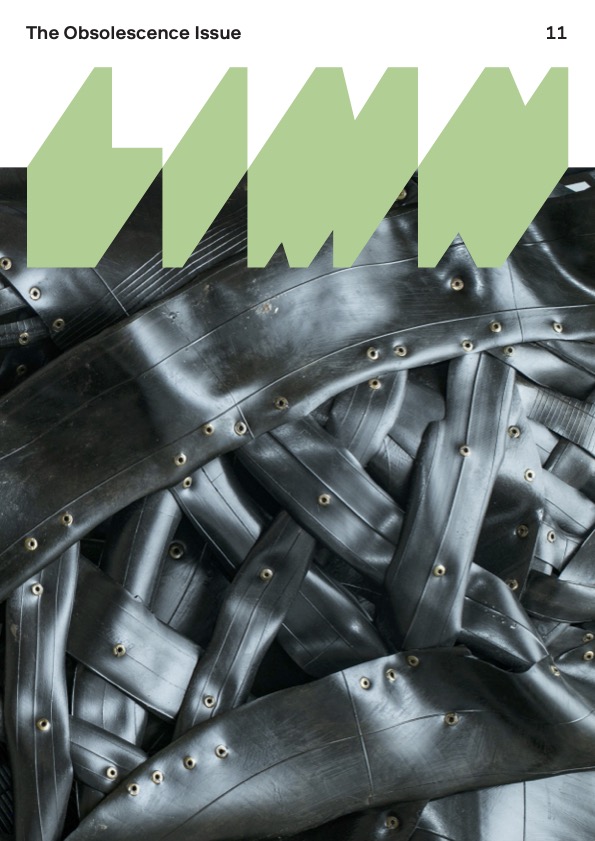
Limn No. 11 – The Obsolescence Issue
Many magazines have published an “innovation issue.” Limn 11 flips the script with an obsolescence issue. Obsolescence evokes history’s also-rans. Out-of-date. Useless. It indexes the hardscrabble realities of postindustrial zones and animates fears about what artificial intelligence will mean for a variety of livelihoods. More than a label or threat, the problem of obsolescence materializes in mountains of e-waste, and in that box of retired gadgets lurking in your attic. But what if we approached obsolescence as more than a side effect of progress? Could it turn out to be something different, even hopeful? Limn 11 gazes into innovation’s rearview mirror to find out.

April 2018: Migrants gather in “jungles” at the mouth of the Chunnel, awaiting an opportunity to cross from mainland Europe into the UK undetected. Somali pirates attack ships queuing up at the Bab-El-Mandeb strait, a critical passage between the Indian Ocean and Mediterranean Sea. A flash crash in the stock market triggers a digital “circuit breaker” that instantly shuts off digital trade until cooler heads prevail. Transcontinental internet connectivity is funneled through bundles of undersea cables, making global information flow susceptible to disruption by something as minor as a misplaced ship anchor. These tunnels, corridors, and cables illustrate how some conduits can become chokepoints, sites where malfunction, blockage, or strategic pressure constricts—or “chokes”—the flows and connections upon which contemporary life depends. Limn 10 brings together anthropologists, geographers, photographers, media scholars, sociologists, ecologists, and historians to explore chokepoints. We ask: When and why do these sites of constriction and connection emerge? How and for whom do they work? And what do chokepoints reveal about the the past, present, and future?

Darjeeling Reconsidered: Histories, Politics, Environments. Edited with Sara Shneiderman. (Oxford University Press, 2018)
Buy from Oxford University Press
Darjeeling occupies a special place in the South Asian imaginary. With its Himalayan vistas, lush tea gardens, and brisk mountain air, Darjeeling was the consummate colonial hill-station. The romance with the “queen of the hills” lives on, as thousands of tourists (domestic and international) annually flock to the hills to taste its world-renowned tea, soak up the colonial nostalgia, and glimpse mighty Mount Kanchenjunga. Darjeeling’s fame has now gone global and its legacy continues to fuel Hollywood and Bollywood fantasies. But this is only part of Darjeeling’s story.
Darjeeling Reconsidered provocatively rethinks Darjeeling’s legendary status in the postcolonial imagination. Mobilizing diverse disciplinary approaches from the social sciences and humanities, this definitive collection of essays sheds fresh light on the region’s past and offers critical insight into the issues facing its people today. The historical analyses break with hackneyed colonial accounts to provide alternative readings of systems of governance, labour, and migration that shaped Darjeeling. The ethnographic chapters present cutting-edge accounts of dynamics that define life in 21st century Darjeeling: among them the realpolitik of subnationalism; Fair Trade tea; indigenous struggle; gendered inequality; ecological transformation; and resource scarcity. Through these eye-opening perspectives, Darjeeling Reconsidered figures Darjeeling as a vital site for South Asian and Postcolonial Studies-and calls for a timely re-examination of the legend and hard-realities of this oft-romanticized region and its people. The book seeks a place on the shelves of postcolonial theorists, on the syllabi of undergraduate and graduate courses on South Asia, and in the rucksacks of intellectually curious visitors from all over the world to Darjeeling.
 Townsend Middleton